
How Much Does It Cost to Paint a House Exterior in Arvada?
There’s no honest single number for painting a house exterior in Arvada, because most of the price is labor, and the labor depends on your house: how tall it is, how much of the old paint is failing, how much trim it has, and whether anything needs repair first. Here’s how an exterior painting estimate actually gets built, what pushes it up or down, and what three of our recent Arvada exterior jobs cost.
Exterior painting cost is driven mostly by labor (setup, access and prep), not by the paint itself. Two houses with the same square footage can be priced thousands of dollars apart because of stories, peeling paint, repairs and trim detail, so compare estimates by what they include, not just the total.
Why Exterior Painting Estimates Vary So Much
Look up exterior painting costs for the Denver area and you’ll find published ranges that disagree by thousands of dollars for similar-sized homes. That isn’t because one of them has the math wrong. Square footage is only the starting point. Most of an exterior estimate is labor: washing, scraping, sanding, caulking, priming, masking, moving ladders, and then applying the finish coats. The paint is usually the smaller part of the bill.
So a painter pricing your house is really estimating hours. Anything that adds hours (a second story, a lot of failing paint, detailed trim, a steep yard) adds cost. Anything that removes hours (sound existing paint, simple siding, easy access) keeps it down. The sections below walk through those factors in roughly the order they move a quote.
Height & Access
House Size, Stories & Access
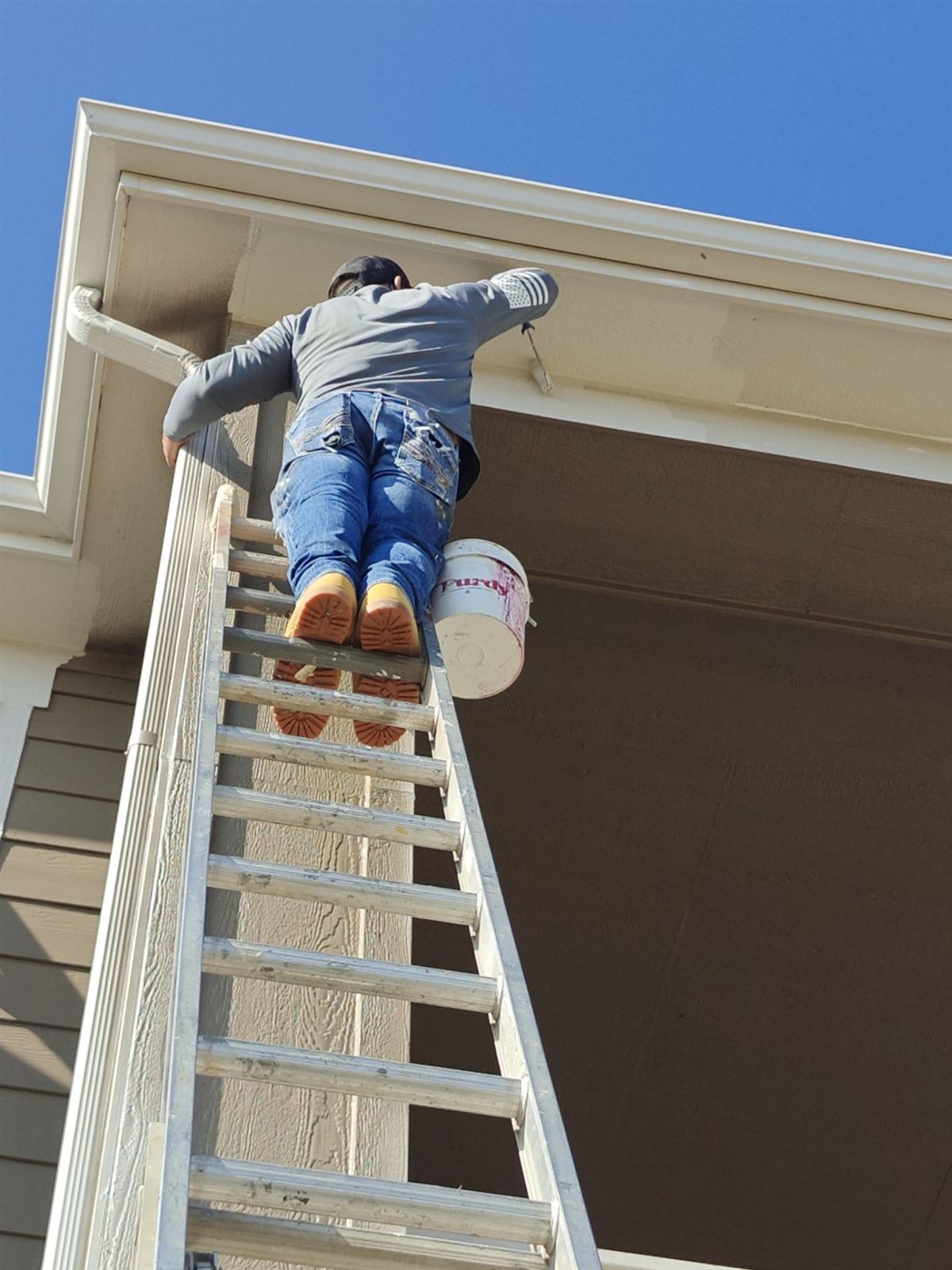
Size sets the baseline: more wall area means more paint and more time. Height changes the math faster than size does, though. A single-story ranch can mostly be painted from the ground and a short ladder. A two-story house means extension ladders at every eave, gable and upper window, and every time a ladder moves, nobody is painting. Soffits, fascia and gutters along a second-story roofline, like the ones in this photo, are some of the slowest surfaces on the whole job.
Access matters too. A walkout basement on a sloped lot, a deck built against the house, dense landscaping close to the siding or a narrow side yard all slow down setup and add masking. None of that shows up in square footage, which is why two homes of a similar size can come back with noticeably different estimates.
Surface Prep
Prep Is the Biggest Variable in the Price
Prep is where careful estimates and cheap ones part ways. Before a finish coat goes on, the house is washed, loose and peeling paint is scraped, rough edges are sanded so they don’t telegraph through, failed caulk is cut out and replaced, and bare wood is primed. On a house whose paint is still sound, that’s a modest part of the job. On a house where paint is peeling off the sun-facing walls, it can be the largest part.
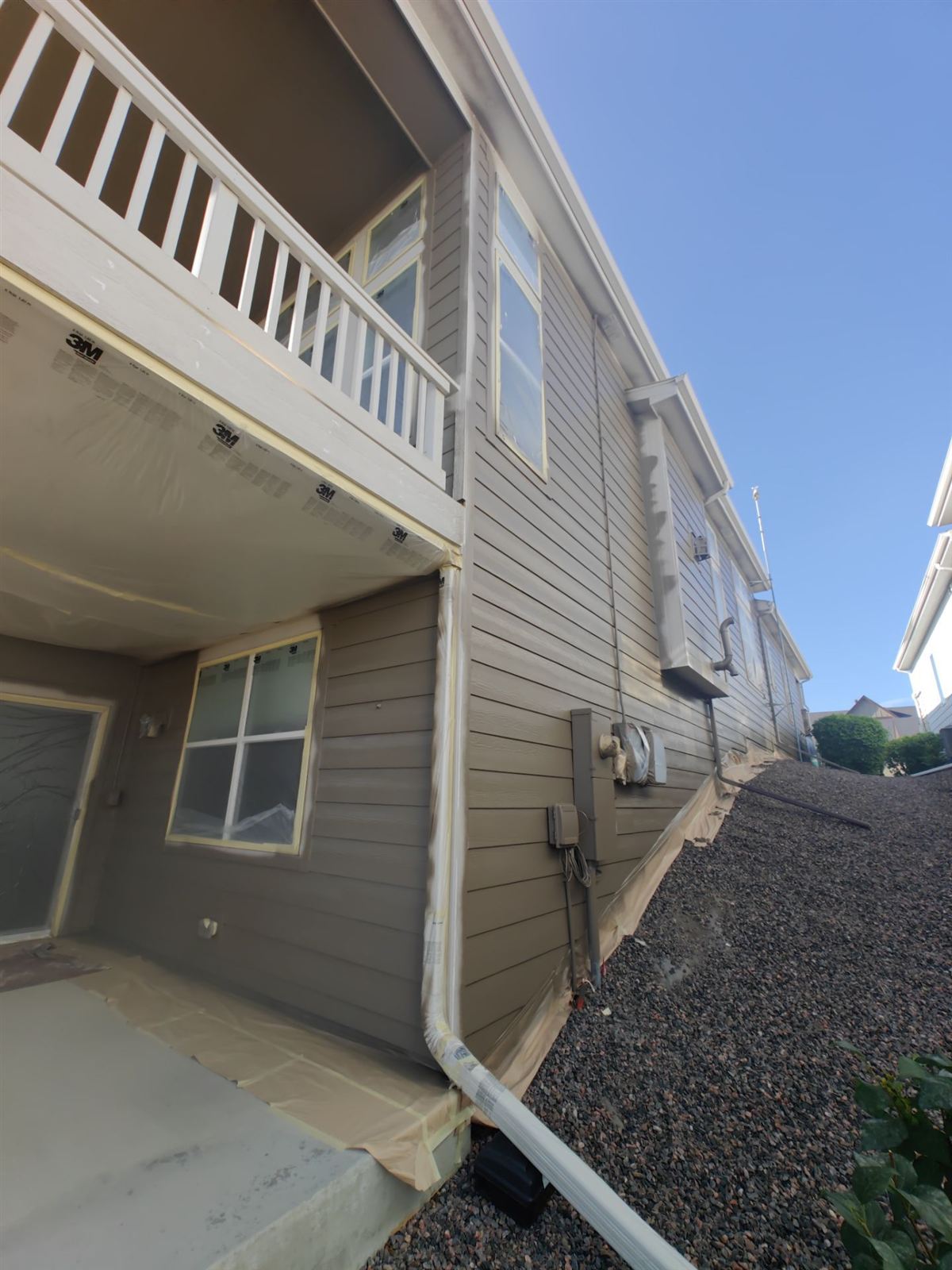
Colorado is hard on exterior paint. Arvada sits about a mile up, so the sun is strong, and south- and west-facing walls usually show fading, chalking and peeling well before the north side does. Big swings between day and night temperatures make wood and caulk expand and contract, which opens up joints over time. The more of that wear a house shows, the more prep hours the estimate has to carry. Masking is prep, too: windows, doors, fixtures, patios and landscaping all get covered before anything is sprayed, as in this photo.
If one quote is far lower than the others, look at prep first. Painting over chalky or peeling paint is faster, and it’s also one of the most common reasons an exterior needs repainting again within a few years. Our exterior painting process lays out the prep steps we include.
Repairs Before Paint, and Why They’re Priced Separately
Paint protects wood; it doesn’t fix it. Cracked or warped siding boards, soft trim, rotted fascia ends and hail-damaged siding have to be repaired or replaced before painting, or the new finish fails at those spots first. Because the amount of damage varies so much from house to house, repairs are often listed as their own line item rather than folded into the painting price.
Some damage only shows up once someone is close to the wall or prep has started. A good estimate tells you how surprises are handled: whether the painter stops, shows you what they found and prices it before doing extra work.
The comparison below is from a real Arvada job. Cracked and warped boards on this corner were replaced, then the whole exterior was repainted. The published price range for that project, repair included, was $3,499–$4,999. The full story is on the siding repair and exterior repaint project page.
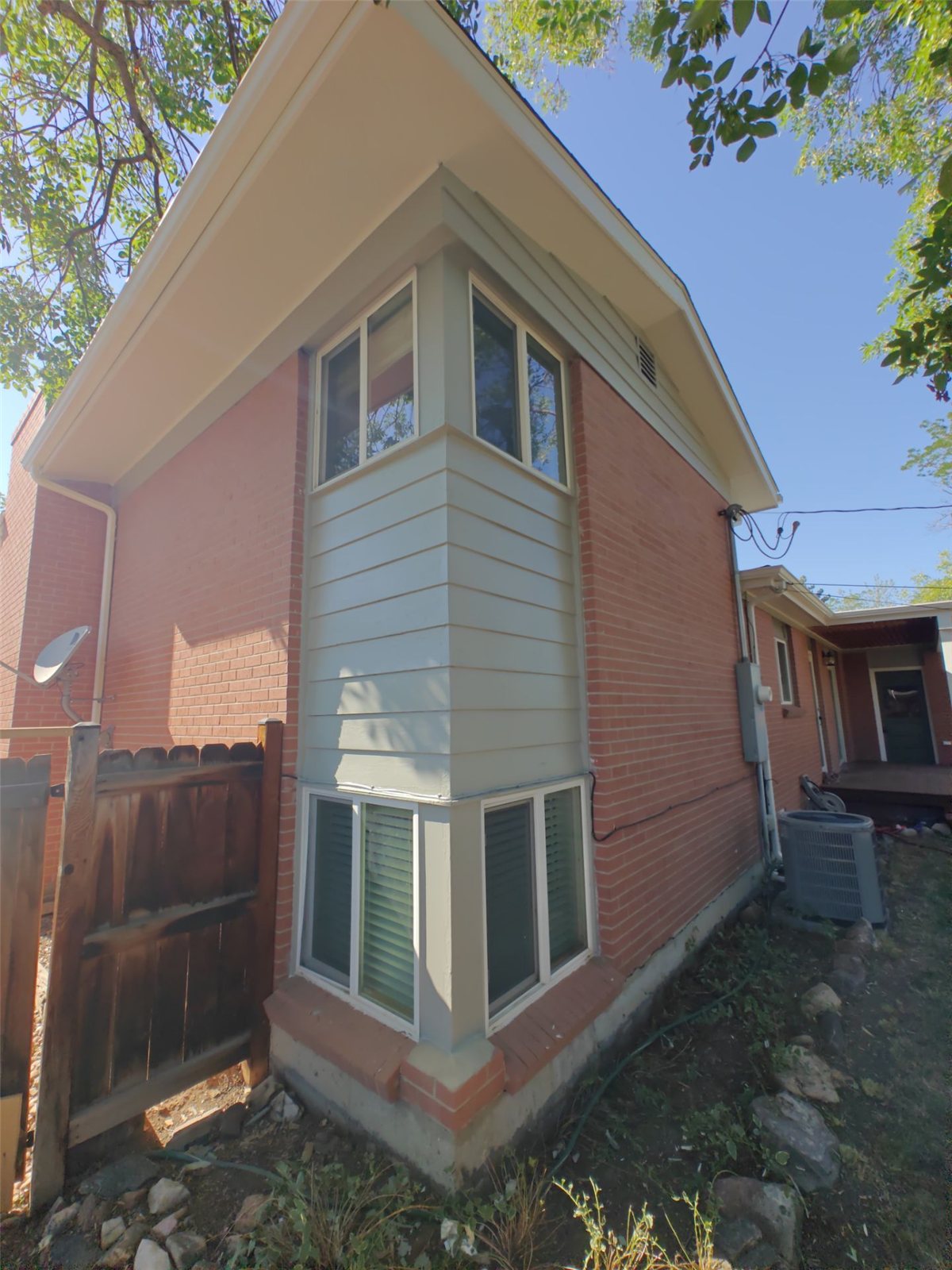
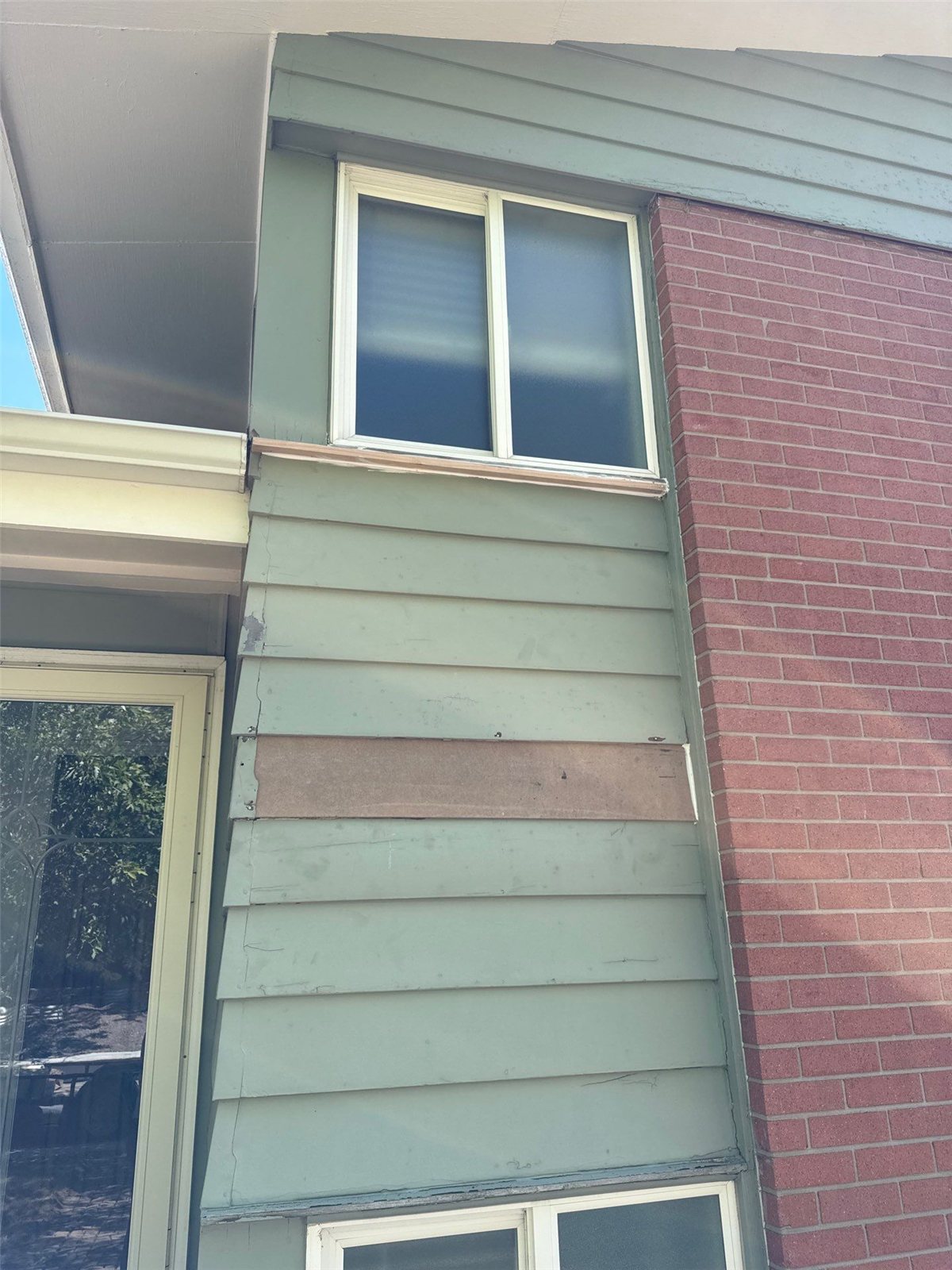
Drag the handle to compare — the same Arvada siding corner before repair and after the finished repaint
Trim, Colors & Paint Quality
Trim takes more time per foot than siding. Window and door casings, corner boards, fascia, soffits, shutters and garage doors are mostly cut in by hand, often after the siding has been sprayed. A house with a lot of trim, bay windows or decorative gables costs more to paint than a plain house of the same size.
Each added color adds work. A single body color with white trim needs one set of masking lines. An accent color on the shutters or front door, or a second body color, means more masking, more cut lines and more separate coating steps.
Paint quality changes the material cost, and usually the lifespan. Premium exterior lines cost noticeably more per gallon than contractor-grade paint, and that difference adds up across a whole house. In strong sun, a better coating tends to hold its color and film longer, which can mean more years between repaints. Ask which product line each estimate uses and how many coats it includes. Two estimates aren’t comparable if one is two coats of a premium paint and the other is one coat of a budget line.
Timing plays a small part as well. In Arvada, exterior painting season typically runs from late spring through early fall, when temperatures stay inside the paint’s application range. Summer dates fill first, so getting an estimate in late winter or early spring gives you the most scheduling options.
What Three Recent Arvada Exterior Repaints Cost
These are the price ranges published on three of our own Arvada exterior projects. They’re real jobs, not a quote for your house: each one reflects that home’s size, condition and scope.
Siding repair & full exterior repaint: $3,499–$4,999
Cracked and warped siding boards replaced, then the siding and trim repainted in a new color. The brick was left natural, and a detached storage shed was repainted to match. See the project.
Full exterior repaint: $5,499–$6,999
Siding, trim and the chimney’s masonry finish repainted, including ladder work at a second-story gable and around a bay window, plus a detached shed painted to match. See the project.
Same-color siding & trim refresh: $6,499–$7,999
A full siding and trim repaint in the home’s existing HOA-approved color, with the same washing, scraping, sanding and caulking as any other repaint. See the project.
The highest of the three was a same-color refresh. Keeping your current color doesn’t make a repaint cheaper on its own: the prep and painting work are the same either way. What moves the number is the house itself.
Questions to Ask When Comparing Exterior Painting Estimates
Use these to line up two or three estimates side by side. Your progress is saved if you come back to this page.
Progress
0 of 8 complete
For the contractor side of the decision, see how to choose a painting contractor in Arvada. If you’d like a number for your own house, we walk the exterior with you and give you a free written estimate, and every job carries a 2-year workmanship warranty. More on our residential painting in Arvada, or request an estimate.
Frequently Asked Questions
Why do exterior painting estimates for the same house vary so much?
Usually because they don’t include the same work. One estimate may include full scraping, caulking and priming with two coats of a premium paint, while another skips most of the prep or quotes one coat of a cheaper line. Compare surfaces, prep, product and coats before comparing totals.
Does a two-story house cost more to paint than a one-story house?
Usually, yes, even at a similar square footage. Upper walls, eaves and gables need extension ladders or other access equipment, and moving and resetting that equipment adds hours that a single-story house doesn’t need.
Is paint or labor the bigger part of an exterior painting estimate?
Labor, in most cases. Washing, scraping, caulking, priming, masking, setup and application take far more of the budget than the paint does. Paint quality still matters, because a better coating can mean more years before the next repaint.
When should I get an exterior painting estimate in Arvada?
Late winter or early spring is a good time. Exterior painting season in Arvada typically runs from late spring through early fall, and summer dates tend to book first, so an early estimate gives you more choice of dates.
Keep Reading
Related Articles
How to Choose a Painting Contractor in Arvada
The questions to ask about licensing, insurance and surface prep before you hire, and the red flags to walk away from.
Read articleShould You Paint Your House Before Selling?
Which rooms and surfaces actually move the needle with Denver metro buyers.
Read articleWant a Written Estimate for Your House?
We’ll walk your exterior, note what it actually needs and give you a free written estimate.