
Fence Staining in Arvada, CO, Both Sides, Done Right.
Most fence stains don't fail from bad product — they fail because only the visible side ever got done. Here's exactly what goes into ours, layer by layer.
Five Layers Between Your Fence and the Weather
A fence that only gets stained on the visible side is only half protected. Scroll through exactly what goes into ours.
Layer 01 · Existing Fence
Layer 01
Existing Fence
Every job starts with a walk down the full fence line — graying panels, loose pickets, popped nails, posts that may have shifted. What we find here, on both sides, decides how much repair the rest of the job needs.
Layer 02
Clean & Clear
We wash both faces of the fence and clear back grass, mulch, and vegetation that's grown up against it. Staining over dirt or plant debris is how a fresh coat ends up patchy and peeling within a season.
Layer 03
Sand & Repair
Rough or splintering boards get sanded, and loose pickets, popped nails, or damaged sections get repaired before any stain goes on. Stain protects wood that's already sound — it doesn't fix a fence that's falling apart.
Layer 04
Stain Both Sides
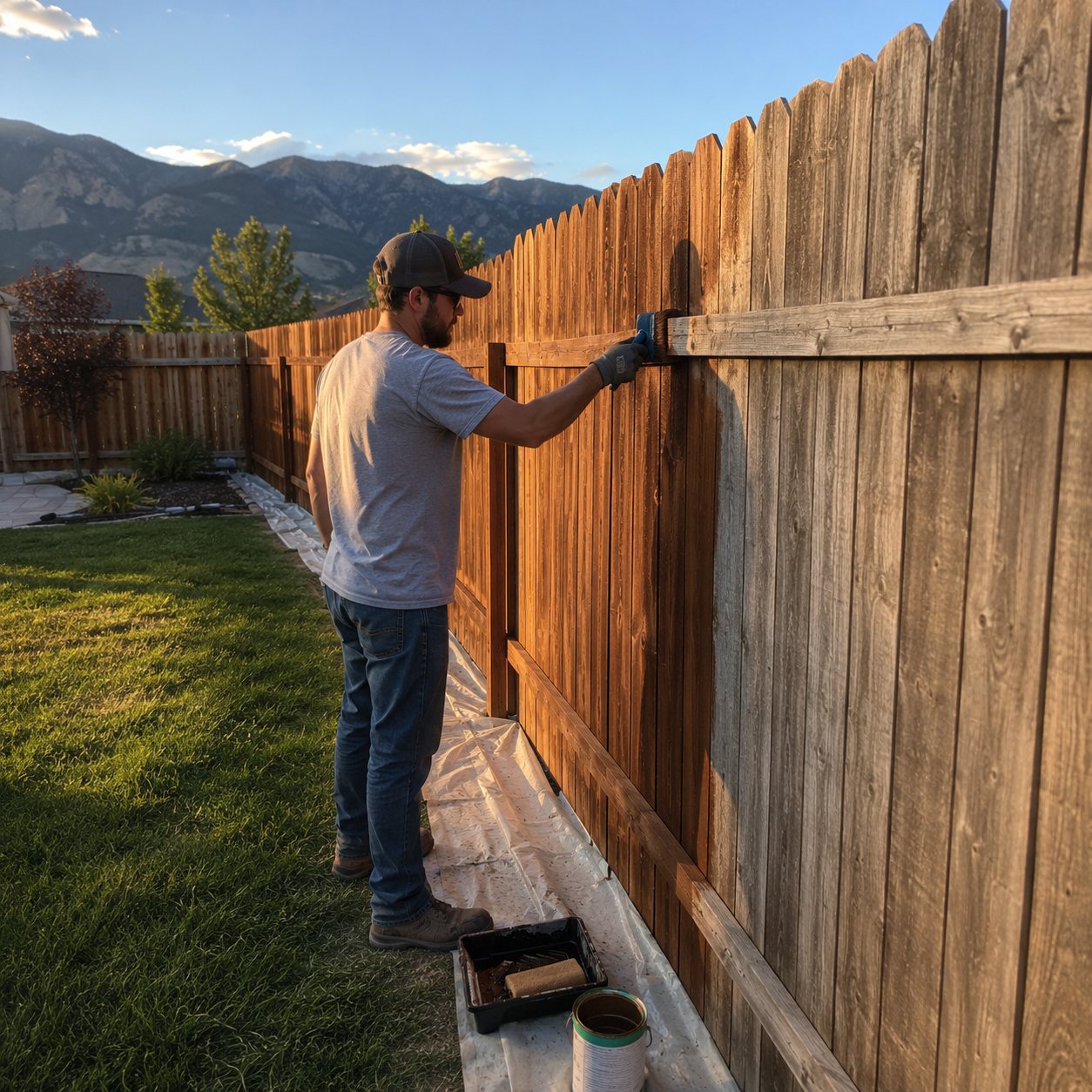
We stain both faces of the fence whenever we have access, not just the side you see from the yard. Weather hits both sides equally, and a fence stained on one face only ages unevenly and needs attention again sooner.
Layer 05
Protective Topcoat
A UV- and weather-resistant topcoat locks it in — the layer that does the most work against Colorado's intense high-altitude sun and the freeze-thaw swings that stress an unprotected finish every winter.
Every Fence Project We Cover
Real prep, both sides, built for the wear Colorado's climate puts on a fence.
Wood Fence Stain vs. Paint vs. Sealer: Which Finish Fits Your Fence?
The right finish depends on the wood, the look you want, and how much upkeep you want to sign up for. Here is how we walk Arvada homeowners through the choice when we quote a fence staining or fence painting job.
Transparent & Semi-Transparent Stain
Lets the grain and natural color of the wood show through. It is the best match for newer cedar or any fence that is still in good shape. With less pigment there is less UV protection, so in Colorado sun these finishes are typically refreshed every 2 to 3 years.
Solid-Color Stain
Opaque pigment evens out blotchy, weathered boards while still soaking into the wood instead of sitting on top like a thick film. It is a strong fit for older fences with mixed condition, and it generally goes longer between coats than a see-through stain. The trade-off is that the grain is hidden.
Paint & Clear Sealer
Paint gives you the most color control, but on a fence that swells and shrinks with the weather it can crack and peel, and old paint has to be scraped before a redo. A clear sealer repels water with almost no color change, though it usually offers little UV protection, so the wood can still gray. We will tell you plainly when one of these is the better call.
Cedar, Pine & Pressure-Treated Fences
Most fences in Arvada, Wheat Ridge, and the rest of the Denver metro are cedar, pine or spruce, or pressure-treated lumber. Cedar resists rot and takes stain beautifully, but it turns silver quickly without UV protection. Pine and spruce are softer and can drink stain unevenly, so they depend on thorough cleaning and a quality penetrating product. Pressure-treated boards often hold moisture from the treatment process and need to dry out before they will accept stain.
Staining vs. Painting: What Most Homeowners Choose
If you like the look of real wood, stain is usually the easier path, because restaining mostly means cleaning and recoating rather than scraping. If you want a bold color or need to hide heavy weathering, a solid stain or paint can make sense. Planning the rest of the yard? The same prep logic applies to our deck staining work, and if the house itself is due for a refresh, see our exterior painting service.
Signs Your Wood Fence Needs Restaining in Colorado
High-altitude sun, dry air, wind, and winter freeze-thaw wear a fence finish down faster than most people expect. Catch it early and the job is simpler.
What to Look For
- Graying or silvering boards. The finish has worn through and UV is breaking down the surface fibers.
- Water soaks in instead of beading. A fence that is still sealed makes water bead up.
- Fading, chalky, or blotchy color. South- and west-facing faces usually go first.
- Cracking, raised grain, or splinters. Bare wood is drying out and checking.
- Dark mildew or green algae. Common on shaded boards and anywhere sprinklers hit the fence.
- Peeling or flaking. An old film finish is failing and needs to come off before recoating.
The Quick Water Test
Sprinkle a little water on a few boards in full sun. If it beads up, the finish is still working. If it darkens the wood and soaks in within a few minutes, the fence is due for fresh stain or sealer.
How Often to Restain a Fence
Plan on every 2 to 3 years for a see-through stain, and often longer for a solid-color stain, depending on exposure, wood type, and the product used. Waiting until the wood is gray, cracked, and rough means more cleaning, sanding, and repair first. For an example of repair plus refinishing on outdoor wood, see our shed siding repair & repaint in Golden.
How We Prep, Dry & Apply Fence Stain Across the Denver Metro
A fence staining job is decided by what happens before the first brushstroke and by what the weather does afterward.
Cleaning, Drying & Minor Repairs
We wash off dirt, mildew, and loose gray fibers, then let the wood dry completely. Boards can feel dry on the surface while still holding moisture inside, so we typically allow a couple of dry days after washing, and longer on shaded runs. Then we reset popped nails, tighten loose pickets, swap out damaged boards where needed, and sand rough spots.
Protecting Plants, Lawn & Hardware
Shrubs, vines, and lawn edges get pulled back or covered, and we mask hinges, latches, and nearby siding or downspouts. If your sprinklers spray the fence, plan to switch them off during the job and for a day or so afterward.
Spraying vs. Brushing a Wood Fence
Spraying covers long runs and tight gaps between pickets quickly, but spray alone can leave stain sitting on the surface. Back-brushing or back-rolling right behind the sprayer works it into the grain and smooths lap marks. Gates and trim are usually brushed by hand.
Best Time to Stain a Fence in Colorado
Late spring and early fall are usually the sweet spot, with mild temperatures in the 50s to 80s and dry days ahead. On hot afternoons, full sun on south- and west-facing boards can dry stain too fast and leave lap marks. We also avoid rain in the forecast, morning dew or frost, and cold overnight lows, and we follow each product's label.
Fence Staining on a New Fence
New wood is not always ready on day one. New cedar often benefits from a few weeks to a couple of months of drying, and pressure-treated lumber can take longer, depending on the weather and how it was treated. Instead of counting days, we use the water test: if a sprinkle soaks in, the wood is ready for stain.
Drying & Cure Time After Staining
Most stains feel dry to the touch within hours, but they keep curing for a day or more, and longer in cool weather. Keep sprinklers, pets, and lawn equipment off the fence until it has fully set, and expect a second coat or topcoat step to need its own drying window.
Both Sides, Shared Fences & HOA Rules: What Arvada Homeowners Should Know
A fence touches more than your own yard, so a few details are worth sorting out before the work starts.
Why Fence Staining Both Sides Matters
Bare wood on one face absorbs moisture differently than finished wood on the other, which can contribute to cupping and uneven aging. Staining both faces keeps the whole board protected and the color consistent from either side.
Shared & Boundary Fences
Many fences are shared with a neighbor. We cannot give legal advice, but a friendly heads-up about timing, stain color, and overspray goes a long way, and agreeing on one color keeps the fence line looking consistent. If we cannot reach one side, we will say so up front and stain what we can access.
HOA & Metro District Rules
Many Denver-metro communities set rules on fence color or require approval before restaining. Check your covenants or ask your HOA first. We are happy to work from an approved color or sample so the finished fence matches what was signed off.
Gates, Posts & End Grain
Gate edges, post bases, and the cut ends of boards soak up the most moisture, so they get extra attention. A fence is only as protected as its most exposed edge.
Keeping it looking good. Trim plants back from the boards, keep sprinklers from soaking the fence, rinse off dirt now and then, and restain before the wood turns gray. If the house is also due for paint, take a look at our full exterior repaint in Arvada. We handle fence staining for homeowners in Arvada, Westminster, Wheat Ridge, and Golden, so request a free estimate and we will walk your fence line with you.
Serving Arvada & the Surrounding Denver Metro
Fence staining, fence painting, and wood fence restoration throughout Jefferson & Adams County communities.
Arvada
Our home base — every neighborhood, all project sizes.
Westminster
Exterior & outdoor staining projects.
Wheat Ridge
Exterior & outdoor staining projects.
Golden
Exterior & outdoor staining projects.
Broomfield
Exterior & outdoor staining projects.
Lakewood
Exterior & outdoor staining projects.
Thornton
Exterior & outdoor staining projects.
Don't See Your City?
Ask us — we regularly travel across the metro.
Fence Staining FAQs
How much does fence staining cost in Arvada, CO?
Cost depends on the fence's total length and height, its current condition, and whether one or both sides need staining. We give every project a free, no-pressure estimate so you know the exact scope and price before any work starts.
How often should I restain my fence?
Every 2 to 3 years for stain, depending on sun exposure and which side of the fence gets more weather. Paint lasts longer between coats, typically 3 to 5 years, but takes more prep to redo since old paint has to be scraped rather than just cleaned.
Should I stain or paint my fence?
Stain penetrates the wood and lets the grain show through, while paint sits on top and hides it but offers a bit more protection from moisture and UV. Most Arvada homeowners choose stain for the natural look and because restaining is a faster job than repainting once it's time again.
What's the best time of year to stain a fence in Colorado?
Late spring or early fall, in the 50 to 80°F range. Staining in the height of summer heat can cause the stain to dry too fast and leave lap marks, and cold weather won't let it cure properly.
Do you stain both sides of the fence?
Yes, when we have access to both sides. Weather hits both faces of a fence, and staining only the visible side leaves the other side unprotected and aging faster, which shows through unevenly over time.
Can you stain a fence after rain, or in the rain?
Not in the rain, and not while the boards are still damp. Moisture in the wood keeps stain from soaking in and can cause blotchy, uneven color. After a rain or a cleaning, we typically wait a couple of dry days, longer in shade, and we avoid staining when more rain is in the forecast for the next day or so.
How long should I wait to stain a new fence?
It depends on the wood and the weather. New cedar often benefits from a few weeks to a couple of months to dry, and pressure-treated lumber can take longer. A simple test is to sprinkle water on a board: if it soaks in, the wood is usually ready, and if it beads up, give it more time.
Do I need HOA approval to restain my fence?
Many HOAs and metro districts in the Denver area set rules on fence color or require approval before restaining, so check your covenants first. If you have an approved color or sample, we can work from it so the finished fence matches.
Can you repair damaged fence boards before staining?
Yes. Loose pickets, popped nails, and damaged boards get repaired or replaced where needed before any stain goes on, because stain protects sound wood but does not fix a failing fence. We will tell you what we see when we walk your fence line for the free estimate.
Are you licensed and insured?
Yes — Arvada PaintWorks is licensed, insured & bonded, and operates as a painting-focused division of Arvada Handyman, with 10+ years of experience and 1,000+ completed projects across the metro.
Ready to Protect Your Fence?
Get a free, no-pressure estimate — we'll walk your fence line and tell you exactly what it needs.