
Interior Painting in Arvada, CO: House Painters Who Prep Room by Room
Most interior paint jobs don't fail from bad paint — they fail from skipped prep. Here's exactly what goes into ours, layer by layer.
Five Layers Between Your Walls and a Finish That Holds
A rushed interior job shows itself fast — lap marks, tape lines that peel, nail holes that reappear through the topcoat. Scroll through exactly what goes into ours.
Layer 01 · Existing Walls
Layer 01
Existing Walls
Every room starts with an honest look at what's there — nail holes, scuffs, hairline cracks, old caulk pulling away at the trim. A hallway wears differently than a guest bedroom, and what we find here decides how much prep the room actually needs.
Layer 02
Patch & Sand
Every hole, ding, and crack gets filled and sanded smooth before any paint goes on. Skipping this step is the single most common reason a "fresh coat" still looks tired — the wall underneath was never actually fixed.
Layer 03
Mask & Protect
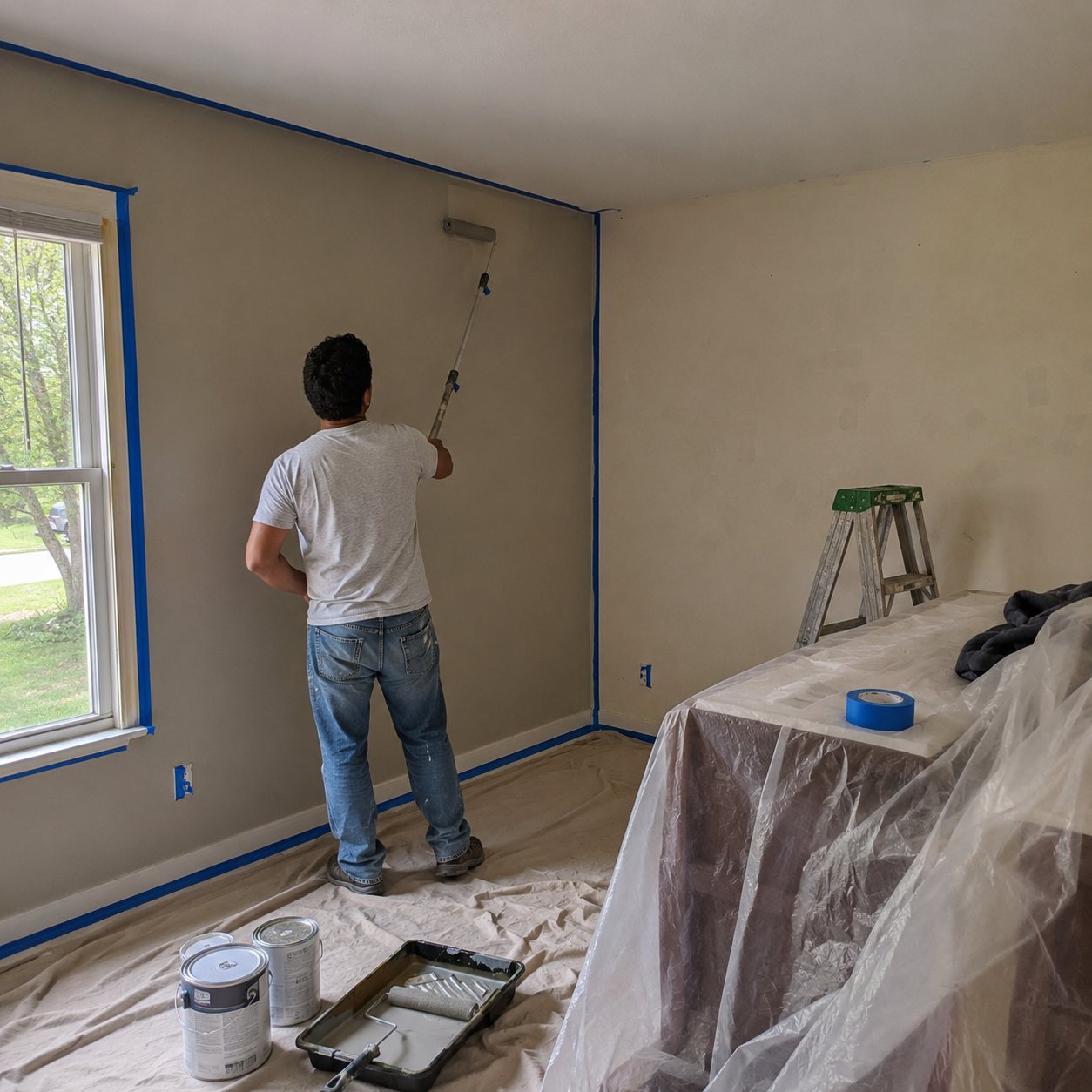
Floors, trim, fixtures, and furniture get fully covered before a single roller comes out. We tape every edge by hand rather than rushing it, because a clean, crisp line is what makes a paint job read as professional instead of DIY.
Layer 04
Prime Where It Matters
Patched areas, color changes, and stain-prone spots — kids' rooms, kitchens, bathrooms — get primed before the topcoat. Paint alone won't lay down evenly over a patch, and skipping primer on a dramatic color change means the old color can bleed through for years.
Layer 05
Two Finish Coats
Two full coats on walls, trim, and ceilings where needed — not one coat and a hope. The second coat is what actually gives a paint job its durability, not just its color; a single coat wears through at switch plates and corners within a year.
Every Interior Surface We Cover
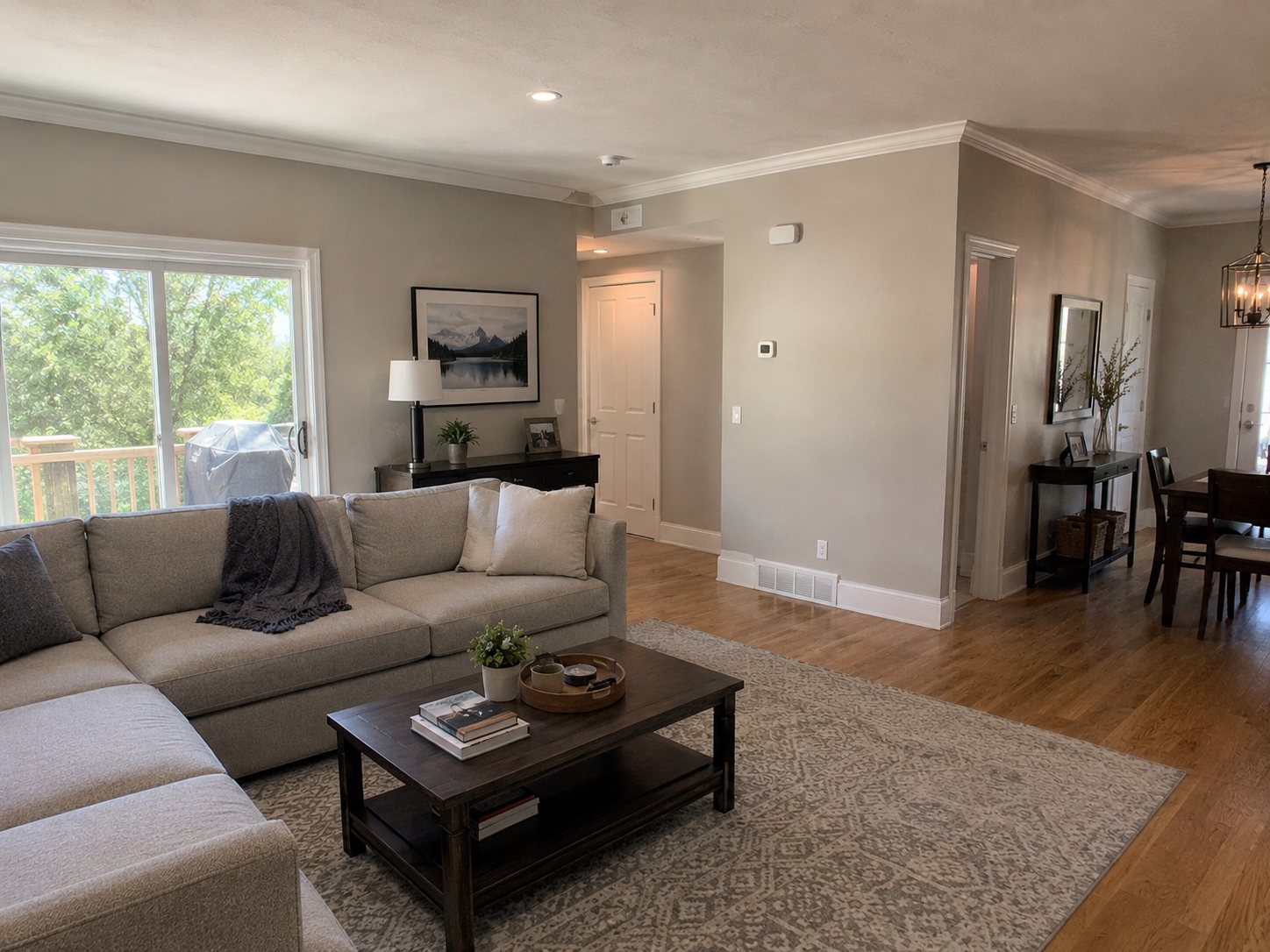
From a single accent wall to a full whole-home repaint — here's what our interior painting services cover.
Whether you want one room refreshed before listing your home or a full interior painting project on every floor, our interior painters treat each surface on its own terms. Walls, ceilings, trim, and doors each need their own prep, product, and sheen. Kitchen cabinets are a separate craft, so if yours are tired too, see our cabinet refinishing service. For offices, shops, and rental turnovers, we also handle commercial painting.
Common Interior Painting Problems in Arvada Homes, and How We Fix Them
Most houses in Arvada, Wheat Ridge, and Lakewood show the same handful of wall problems once the old paint gets an honest look. Here is what we see most often and how a proper interior painting job deals with each one.
Nail Pops & Hairline Cracks
Drywall moves as a house settles and as indoor humidity swings with the seasons, so nail pops and hairline cracks along seams and door corners show up even in newer homes. We re-set or cover the fastener, fill and sand the spot, and prime it so the repair does not flash through the finish.
Scuffs, Stains & Marks
Hallways, stairwells, and kids’ rooms collect scuffs and marks that bleed through ordinary paint. We clean the surface first, then spot-prime stain-prone areas with a stain-blocking primer so smoke, grease, or water rings do not reappear through the new coat.
Peeling Paint in Kitchens & Baths
Steam breaks paint down in bathrooms, and grease does the same near the stove. We scrape what is loose, sand the edges smooth, and finish with a washable, moisture-resistant sheen. If the moisture comes from a plumbing leak, that needs to be fixed first, and we will tell you so.
Dark or Bold Colors
Going from deep red, navy, or charcoal to a light neutral rarely works with finish paint alone. We prime with a tinted or high-hide primer where it matters, then apply two full finish coats so the old color stays gone instead of ghosting through.
Dingy Ceilings & Water Stains
Ceilings yellow over the years from cooking and candles, and old leak stains tend to bleed back through. We spot-prime stains, roll the ceiling in a flat finish that hides imperfections, and cut a clean, straight line where ceiling meets wall.
Worn Trim, Doors & Baseboards
Trim takes the most abuse in any house: kicked baseboards, chipped door edges, and caulk lines that have opened up. We repair dents, re-caulk gaps, and finish trim in a harder, more cleanable sheen so it looks crisp beside freshly painted walls.
Choosing Interior Paint, Sheen & Color for Denver-Metro Homes
The right paint for your house depends on the room, the light, and how you live in it. A few choices make a real difference in how interior painting looks and lasts in a Colorado home.
Sheen by Room
Flat and matte finishes hide wall imperfections, which suits ceilings and low-traffic bedrooms. Eggshell is a common pick for living and dining rooms. Satin and semi-gloss wipe clean more easily, so they fit kitchens, bathrooms, kids’ rooms, trim, and doors. Higher sheens show flaws more, which is one more reason prep matters.
Low-Odor & Low-VOC Options
Many modern interior paints are low-VOC or low-odor, which matters if you have kids, pets, or a home office. With good ventilation the smell typically fades within a day or two. Ask about lower-odor options when we walk your home and we will talk through what makes sense for each room.
Colorado’s Dry Air & Altitude
Low humidity makes water-based paint dry quickly, especially in winter when furnaces dry out the house. Rushed work can leave lap marks and brush marks that set before the paint levels out. Working in manageable sections, keeping a wet edge, and choosing products with good open time help the finish go on smooth. Paint can feel dry fast while it is still curing, so treat fresh walls gently for the first couple of weeks.
Color in Colorado Light
Strong high-altitude sunlight and large south- and west-facing windows change how a color reads from morning to evening. Test samples on two or three walls and check them in different light before you commit. Neutral and muted tones are easy to live with, and bold colors work well too when they are primed properly. Not sure where to start? Bring it up at your free estimate.
Serving Arvada & the Surrounding Denver Metro
Interior painting projects throughout Jefferson & Adams County communities. Our house painters work in homes of every age, from older bungalows near Wheat Ridge and Lakewood to newer builds in Westminster, Broomfield, and Golden.
Arvada
Our home base — every neighborhood, all project sizes.
Westminster
Interior & commercial painting.
Wheat Ridge
Interior & commercial painting.
Golden
Interior & commercial painting.
Broomfield
Interior & commercial painting.
Lakewood
Interior & commercial painting.
Thornton
Interior & commercial painting.
Don't See Your City?
Ask us — we regularly travel across the metro.
What Affects Interior Painting Cost & Timeline in Arvada, CO
No two houses are alike, so we do not price interior painting from a formula over the phone. Here is what moves the scope and the schedule, so any estimate you get makes sense.
Size & Number of Rooms
More square footage and more rooms mean more labor and material, but a few large rooms can take longer than several small ones. Walls are only part of the picture.
Ceiling Height & Layout
Vaulted ceilings, open stairwells, and tall entryways need extra equipment and time to reach safely and cut clean lines, whether the house is in Arvada, Thornton, or anywhere else in the metro.
Condition of the Walls
Textured, patched, or damaged walls need more prep than smooth, well-kept ones. Prep is where most of the hours go and where most of the lasting quality comes from.
Color Changes
A light-to-light refresh is a different job from a dark-to-light change, which calls for primer and sometimes extra coats to fully cover the old color.
Trim, Doors & Ceilings
Interior painting limited to walls moves faster than walls plus ceilings, baseboards, crown molding, doors, and window casings. Detailed trim, common in older homes, takes extra cutting time.
Occupied Homes & Scheduling
Working around furniture, pets, and your daily routine can add steps compared with an empty house. Tell us your constraints and we will plan the work around them.
How Long Does an Interior Repaint Take?
As a rough guide, a single room is often a one-day job, while a whole-home repaint can span several days to a couple of weeks depending on size and prep. Paint also needs time to dry between coats. We give you a realistic schedule after seeing the home rather than a promise before we have. Request your free interior painting estimate and we will walk the space with you.
How to Prepare Your Home for Interior Painters
We move and cover furniture in place for most rooms, so you do not need to empty the house. A little preparation on your side still helps your interior painting project run faster and the finish come out cleaner.
Before Painting Day
- Clear fragile items, decor, and valuables out of the rooms being painted.
- Take down wall art, mirrors, and shelf decor, or ask us to handle it.
- Tell us about pets, work-from-home hours, and any rooms to leave alone.
- Point out repairs you have noticed, such as stains, cracks, or past leaks.
- Test color samples on the wall and decide on sheens ahead of time.
After the Last Coat
- Keep windows open when you can for a day or two so the paint odor clears.
- Wait about a day before moving light furniture back, and a few days for heavy pieces.
- Go easy on fresh walls and hold off on scrubbing for a couple of weeks while the paint cures.
- Keep leftover paint, labeled by room, for quick touch-ups later.
- Tell us about any spot you want a second look at, since our work carries a 2-year workmanship warranty.
Planning to update the outside of the house too? Our exterior painting team can match the palette inside and out. See how a finished project looks in our Arvada siding and trim color refresh or this Arvada exterior repaint.
Interior Painting FAQs
How much does interior painting cost in Arvada, CO?
Cost depends on the number of rooms, ceiling height, how much patching or color-change priming is needed, and which surfaces are involved — walls, trim, doors, and ceilings all add time differently. We give every project a free, no-pressure estimate so you know the exact scope and price before any work starts.
How long does interior paint actually last?
It depends heavily on the room. High-traffic hallways and entryways typically need a refresh every 2 to 3 years, kitchens and bathrooms every 3 to 4 years because of grease, steam, and humidity, and living rooms or bedrooms can often go 5 to 7 years. Low-traffic guest rooms can stretch to 7 to 10 years with proper prep.
Do you really need two coats of paint?
Yes, for any color that isn't a close match to what's already there. The second coat isn't just for even color coverage — it's what gives the paint film its actual durability at switch plates, corners, and high-touch areas. A single coat wears through fast no matter how good the paint is.
What's the best time of year for interior painting?
Interior work can happen year-round since it isn't weather-dependent the way exterior painting is, but cooler months with lower humidity, typically late winter or early spring, let paint cure a little faster and more evenly.
Do I need to move all my furniture out?
No. We move and fully cover furniture in place for most rooms. Only a full whole-home repaint combined with flooring work usually calls for clearing a room completely, and we'll tell you upfront if your project needs that.
Are you licensed and insured?
Yes — Arvada PaintWorks is licensed, insured & bonded, and operates as a painting-focused division of Arvada Handyman, with 10+ years of experience and 1,000+ completed projects across the metro.
How long does it take to paint the interior of a house?
It depends on the size of the home, the condition of the walls, and how many surfaces are included. A single room is often finished in about a day, while a whole-home interior painting project can take several days to a couple of weeks. Prep, primer, and drying time between coats all affect the schedule, and we give you a realistic timeline at your free estimate.
What paint finish should I use for walls, trim, kitchens and bathrooms?
Flat or matte finishes hide imperfections and suit ceilings and low-traffic rooms. Eggshell works well in living areas, while satin and semi-gloss are more washable and moisture-resistant, which makes them a better fit for kitchens, bathrooms, kids’ rooms, trim, and doors. We help you choose by room during your estimate.
Can you paint over a dark or bold wall color?
Yes. Going from a deep color to a lighter one usually calls for a tinted or high-hide primer plus two finish coats so the old color does not show through. Skipping primer on a dramatic color change is one of the most common reasons walls look streaky or uneven months later.
How long does paint smell last, and when can I use the room again?
With modern low-odor or low-VOC paint and good ventilation, the smell typically fades within a day or two. Most rooms can be used again once the paint is dry to the touch, though we recommend keeping windows open when you can and being gentle with fresh walls, since paint keeps curing for a couple of weeks.
Ready to Refresh Your Home's Interior?
Get a free, no-pressure estimate — we'll walk your space and tell you exactly what it needs.